

This EU Regulation might just change the game for sustainable fashion.
ESPR stands for Ecodesign for Sustainable Products Regulation. Published on the 13th of June 2024, 2026 will be a pivotal year in its application and reach.
EU legislation can often feel far above us and complex, making it hard to grasp the real impact it might have on our everyday lives and purchases. In this article, we'll unpack this new pillar of the EU's Strategy for Sustainable and Circular Textiles and discuss why it is such an important piece of the puzzle.
General principles established by the ESPR
The overarching goal of this Regulation is to establish a framework for ecodesign requirements for all physical goods placed on the EU market, built around three main pillars that will directly impact the textile and apparel industry.
Before we dive into the mechanisms and specifics, it's important to understand that this piece of legislation is a framework. It won't mandate everything on its own, but it equips the different bodies, the European Commission, member states, and others, with the tools to reach the goals outlined in the law. In short, the ESPR is legally requiring producers to make better products: products that last, are repairable, and are recyclable. This is what we call designing for circularity. The legislation also supports clearer, more trusted information for consumers about the products they buy.
To do so, the ESPR grants the European Commission the power to adopt delegated acts¹, setting legally binding ecodesign requirements for specific products. Textiles were identified as a priority area in the working plan that followed, so the delegated act for our industry is already underway. Technical analysis is being carried out by the Joint Research Centre, with the act expected in 2027. When it lands, it will set requirements covering durability, reliability, repairability, composition, fabric strength and the presence of substances of concern, all directly targeting planned obsolescence.
Alongside this, the ESPR empowers the Commission to require brands to disclose all substances of concern in their products, specifically to support proper waste management at end of life. This matters enormously, because textile waste routinely travels across borders and continents with almost no regulation governing what happens to it. The delegated act is also expected to include public procurement standards, which would mean that governments and public bodies across the EU could only purchase textiles that meet these new sustainability criteria, turning public spending into a lever for change.
A long-awaited ban
Although this legislation acts as a framework, it directly addresses the issue of unsold goods by introducing tangible, binding new rules, ones that don't need further legislating. They are applicable under the ESPR itself, starting this July!
The issue of unsold textiles being destroyed while in perfect condition has been raised by civil society organisations for almost a decade, with famous scandals involving luxury brands such as Burberry in 2018², and distributing giants such as Amazon³. At the European level, up to 9% of unsold textiles are being destroyed, generating 5.6 million tonnes of CO₂ emissions, roughly equivalent to Sweden's entire annual emissions! Beyond deadstock (unsold/returned goods), about 1 in 5 garments sold online are returned, of which on average a third is destroyed.
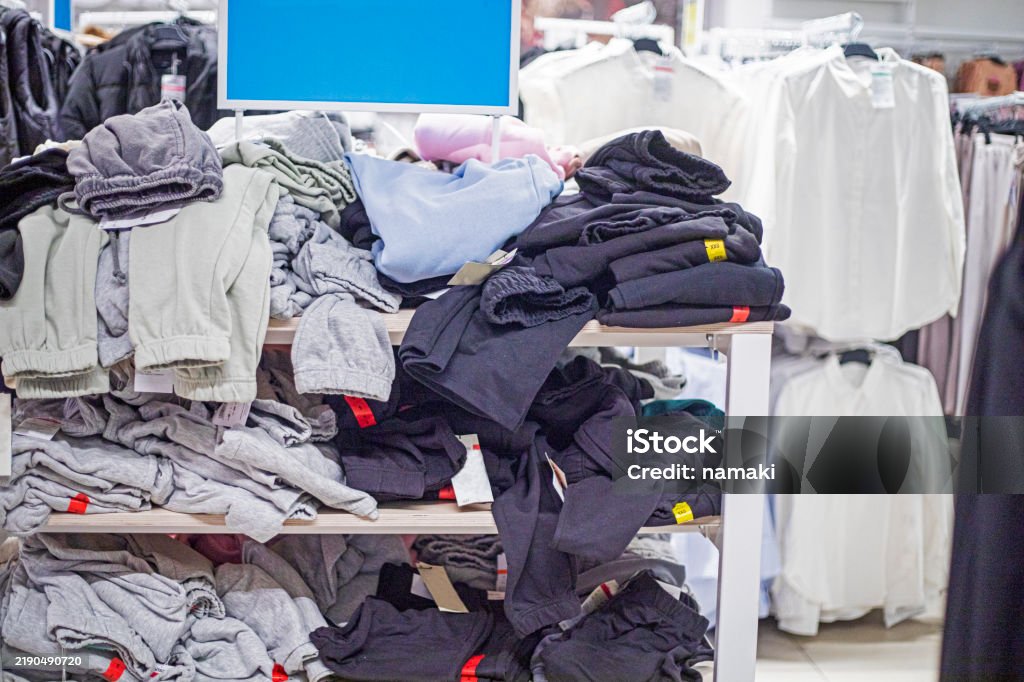
This practice has often been documented as the logical result of overproduction as a business model, making this highly wasteful habit a choice for many large corporations. The ESPR introduces two new restrictions to combat it.
First, because transparency is key and data its enabler; economic operators must disclose the number and weight of unsold consumer products discarded, including the reason, the method, and the treatment applied.
Second, and more significantly for our industry, the ESPR introduces a ban on the destruction of unsold apparel, clothing accessories and footwear, a long-standing ask from VOICE Ireland, as we collaborated with Irish TDs and Senators on the national "Ban on Dumping New Products Bill" in 2022. What is considered as destruction includes: "recycling, other recovery and disposal”.
This ban, although only targeting apparel and footwear, includes returned goods within the 14-day cooling-off period and holds not only producers but also distributors and service providers responsible, meaning large scale platforms are in scope too.
This is a welcome measure that finally recognises that destroying perfectly good products simply due to planned overproduction is neither a viable nor an ethical business model, and contradicts any sustainability claims a company might make in its reporting.
The ban comes into force on the 19th of July 2026 only for large companies. Medium-sized enterprises will be included in the ban starting from 19 July 2030, while micro and small businesses are exempted altogether. and we'll need to monitor it closely, because a few potential loopholes remain. Most notably, the derogation for physical damage, including hygiene issues, where repair is deemed not technically feasible or cost-effective. That last part is a problem. The destruction of unsold goods is usually the product of a business model that relies on overproduction at volume, which is precisely what makes repairing or salvaging individual items appear "not cost-effective" on a spreadsheet. In other words, the derogation risks giving a legal argument to bypass the rules this ban was designed to target.
Beyond this potential loophole, there is a broader and arguably more systemic challenge: the continuity of transparency once goods leave EU borders. The ESPR's destruction ban and disclosure requirements apply to products placed on the EU market and discarded within it. But a company can legally export pallets of unsold stock classified as "goods for resale" to brokers in India, Ghana, Turkey or elsewhere, and what happens to those garments beyond that point falls entirely outside the regulation's reach. Incineration in a facility abroad would therefore look identical to genuine reuse on an EU compliance form. And with no obligation to track or report on the fate of exported unsold stock, the ban risks being quietly circumvented by simply moving the problem somewhere less regulated, and somewhere far less visible.
The Digital Product Passport: a game changer?
Before deciding whether the DPP is a game changer, it's important to understand what it is, how it works, and what it does and doesn't do.
Article 9 of the ESPR establishes the Digital Product Passport as a mandatory information requirement. Think of it as a permanent ID card for every garment sold on the European market.
Right now, when you buy a jumper, the label tells you it's 60% cotton and 40% polyester, made in Bangladesh, wash at 30°. That's roughly it, and even then, there is reason to question the accuracy of that information. A 2020 study found that only 41% of clothing labels are accurate. The charity shop that receives the garment months or years later knows little about it. The recycling facility that eventually gets it has no idea of its real composition or what chemicals went into the dye, which means they can't safely process it, so it likely ends up incinerated.
The DPP changes all of that. Every product will have a data carrier physically attached, which for garments will almost certainly be a QR code on the care label, linking to a digital record containing everything meaningful about that product. Not a marketing page, a standardised, machine-readable file that different people can access for different purposes.
The details will be set out in a delegated act, but what matters already is that this digital record will show different things depending on who's looking.
- A consumer will see detailed composition, sustainability credentials, care and repair instructions, and potentially a durability score.
- A professional recycler scanning the same code gets something different: the exact chemical composition of finishing agents, instructions for separating components, and guidance on which recycling stream each part belongs to.
- A customs officer or market surveillance authority gets the full compliance file, test reports, declarations of conformity...
The idea is that everyone in the chain gets the information they actually need. This will force brands to genuinely know their own supply chains. Today, most brands have reasonable visibility of their tier-1 suppliers, the factories that cut and sew the garment, but far less visibility of what came before. Yet tier-2 suppliers, weavers and knitters, and tier-3 suppliers, those spinning the yarn and dyeing the fibre, hold information that is crucial to a product's real sustainability profile and recyclability. The DPP requires that data to be collected and be accessible.
The DPP is a genuine game changer in that it should create transparency and a level a playing field where brands have been able to withhold information from consumers for far too long, or simply not going through the trouble of gathering it in the first place. With the DPP in place, greenwashing becomes much harder, and verifying sustainability claims becomes much easier, for conscious consumers, for resale markets, and for recyclers trying to do their jobs properly.
Conclusion
The ESPR is a genuinely important piece of legislation. It establishes a clear framework for Ecodesign that will push brands towards creating products that are built to last and designed to be reused and repaired, rather than disposable and cheaply made regardless of the cost to people and planet. It also creates essential tools for transparency across the industry and bans practices that are fundamentally at odds with any serious circularity principles.
That said, it won't radically change things overnight. Much of it reflects what should already be common sense at a time of scarce resources and an urgent need to slow consumption and accelerate circularity. A more transformative solution would go further still, reducing overproduction at source, simplifying garment compositions so that all products are 100% compostable or recyclable within our current capacity, and effectively phasing out harmful synthetic blends. These would be more radical steps, but they might be exactly what is needed to confront business models that have long been allowed to optimise for profit rather than for the common good, the wellbeing of the people who make our clothes, and the health of the planet we all share.
Notes
¹ A delegated act is a legal tool that allows the European Commission to add or adjust specific technical details to an existing law, without going through the full legislative process again. It is still legally binding, but it allows the regulation to be updated and specified over time as knowledge, technology and market realities evolve.
² In 2018, Burberry publicly disclosed in its annual report that it had destroyed £28.6 million worth of unsold products, including clothing, accessories and perfume, to protect its brand exclusivity. The revelation sparked widespread public outrage and became one of the most cited examples of the fashion industry's destruction of unsold goods.
³ Multiple investigations have documented Amazon's destruction of unsold and returned goods. A 2021 ITV News investigation into Amazon's fulfilment centre in Dunfermline, Scotland, found that the warehouse was destroying millions of items every year, including clothing, electronics and other consumer goods, many of them brand new and unused. Amazon attributed the practice to items deemed unsellable but has since faced pressure to reform, though the structural incentives that drive it remain largely in place across the industry.


